Cerrado Infinito, since 2015...
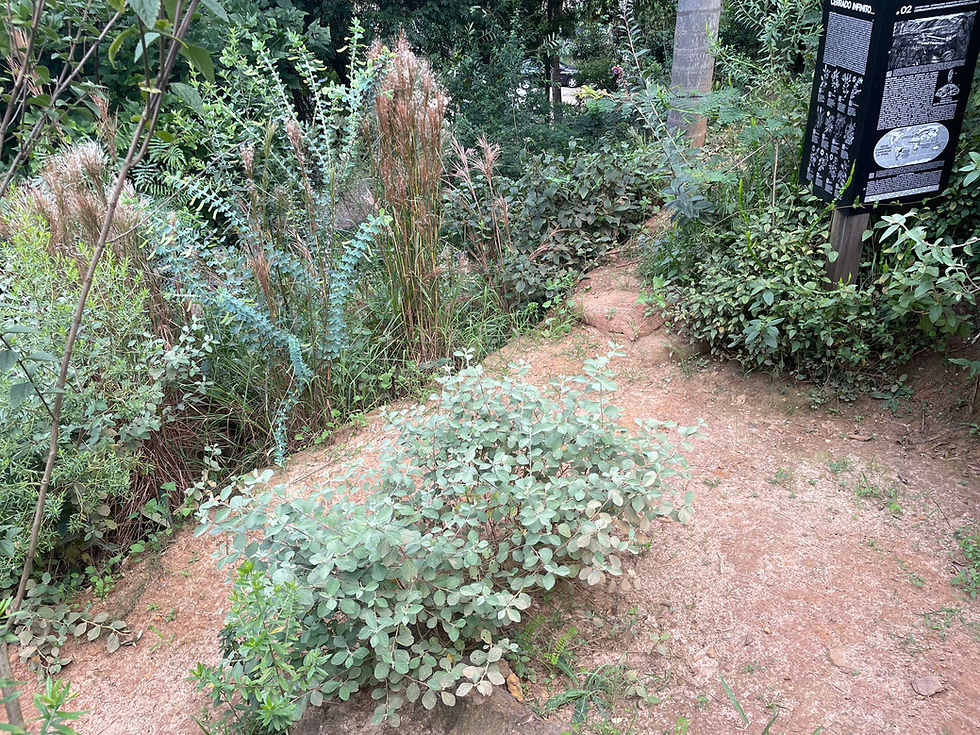
Cerrado Infinito is a cultural ecosystem of approximately 2,000m2, a 240m long trail, and more than 120 species of native country plants.

Cerrado Infinito is the first ruderal artistic process and the first floristic reconstruction of cerrado in an urban area, establishing territories of resistance for plants annihilated throughout the urban expansion of São Paulo — silent victims of an ongoing history of expropriation, ecological suppression and cultural erasure.
By mapping survivors—isolated plants that survive on urban margins, sidewalks, roundabouts, and cracks—seeds and seedlings are collected to form new groups. When established, these plant groups not only form a landscape, but also reclaim the deep ecology of a territory that predates colonial occupation, opening fissures within the dominant logic of urban land use and control. Each planting is an operation of spatial deprogramming and a gesture of symbolic restitution of the land to its primordial state.
In this process, the wasteland is cultivated as a space for recomposition — not as an absence of order, but as an active field of biodiversity, memory and coexistence. There, plants, animals and people come together again to coexist in a way that was forbidden by the dynamics of modernization, rescuing what remains of the lost paradise of São Paulo: a forgotten mosaic of cerrado fields, marshy floodplains and Atlantic Forest forests, which sustained the biological and cultural complexity of this territory.
Cerrado Infinito proposes to invert the arboreocentric and productivist aesthetics that govern environmental policies, making room for a flora that is systematically made invisible and dismissed as "weeds" — an uncomfortable residue in the face of the hegemonic narrative of progress. By bringing back these founding species, the project confronts the city with its own ecocultural genealogy, still masked under layers of concrete, glass and asphalt.
If São Paulo has been transformed into a model of national development, with its trail of environmental degradation and homogenization, the Cerrado Infinito acts as a living anti-monument. A gesture of resistance and reminder of our recurring collective inability to protect the founding biomes — and with them, the identities and cosmologies that connect us to the original landscape of the territory.


Photos by Daniel Caballero and Tiago Queiroz
A arte ruderal de Daniel Caballero: Cerrado Infinito é uma terra indígena! por Daniela Canguçu
Acho que deveríamos sonhar a terra, pois ela tem coração e respira.
Davi Kopenawa
“Gosto de chamar mais pessoas para serem selvagens” (GUARANI, 2023, p. 29). É assim que a pedagoga e liderança Guarani Mbya da Terra Indígena Tenondé Porã, no extremo sul da cidade de São Paulo, se manifesta frente ao desastre do colonialismo para seu povo - o genocídio e tudo mais que torna patente a morte concreta e simbólica. Para Jerá Guarani, assim como outros indígenas, tornar-se selvagem, nesse cenário, seria renunciar a todos os meios de destruição, desempenhados pela vida civilizada. Em meio às experimentações com o projeto Cerrado Infinito1, o artista visual Daniel Caballero não poupa esforços para externar, através de exemplos vivos que estão à mostra, que o mundo é um acontecimento vegetal antes de ser um acontecimento animal. Suas ações dirigidas ao público se afirmam, quase sempre, de uma maneira divertida: “Escutem as plantas, conversem com elas!, ele diz. E ainda faz uma advertência: “As plantas falam baixo!”.
Levemos a sério essa ‘conversa silenciosa’, ao menos por um instante, a fim de radicalizar a proposição do artista. Levar a sério é, para começar, descolonizar. O que vem, os eventos, são passagens e estas são demonstrativas da porosidade de Daniel Caballero à cultura indígena e, aqui em especial, à língua vegetal Guarani: As narrativas Kaiowá demonstram que, como nossos olhos humanos comuns, estamos cegos à forma peculiar de vida das plantas e vivemos surdos à sua língua, quer dizer não conseguimos nem vê-las em sua forma original nem entender suas falas. A nossa comunicação possui uma absoluta desarmonia não só pela falta de entendimento, mas também porque a língua vegetal é perfeita, cada palavra pronunciada pelas plantas não possui imperfeição (JOÃO, 2023, p. 112).
Nesse ensaio, a abordagem ficou circunstanciada a duas versões do projeto. Eis, então, a descrição do artista: Cerrado Infinito da Praça da Nascente, na Pompeia - um cerrado profundo meio anárquico que convive com trechos da vegetação urbana, formada quase exclusivamente por espécies exóticas. E Cerrado Infinito da Casa das Caldeiras - patrimônio do processo industrial, ressignificado como uma fábrica de natureza. As respectivas imagens pertencem ao arquivo de Daniel Caballero: a imagem 1 (ilustração do artista no livro Guia de campo dos Campos de Piratininga ou O que sobrou do cerrado paulistano ou Como fazer seu próprio Cerrado Infinito), a imagem 2 (de minha autoria, um trecho do mosaico de espécies do cerrado na Casa das Caldeiras), e a imagem 3 (o artista no Cerrado Infinito da Praça da Nascente,
Parece inegável que a ideia de uma ‘língua vegetal perfeita’ tenha ressonâncias com a ‘conversa silenciosa’, imantada por Caballero. Atraído pelo ‘pensamento selvagem’, ou melhor, pela força da estética dos povos originários, sua afecção mais imediata é “Cerrado Infinito é uma terra indígena!”
Daí, os paralelos são diretos, nesse caso, as existências das plantas são tomadas afirmativamente pelo artista que precisa, de tempos em tempos, retransmitir o óbvio, ou seja, que elas são seres com direito à vida. O laço entre as questões axiais que perpassam o trabalho artístico com os territórios indígenas, é declarado por ele, de muitas maneiras: Não posso deixar de pensar nos parques naturais ou fazer uma analogia com as reservas indígenas. Territórios mal compreendidos, onde pessoas são arrasadas por ideias doces de integração social ou cultural ou, pior do que isso, arrasadas por ideias amargas de integração social e cultural. Como podemos dar ou retirar terra de povos que viviam aqui muito antes de nós? Sem citar o genocídio à luz do dia que acontece na atualidade com a conivência das autoridades e da sociedade, que no máximo adora algum nome ‘Guarani’nas redes sociais – a própria palavra ‘reserva’ já explica tudo. Nós, povo brasileiro, delimitamos territórios para ‘guardar’ povos diferentes entre si, cada um com sua culturaprópria e todas distantes da nossa. Como sabemos o que eles precisam se não entendemos como eles pensam? O mundo contemporâneo é um liquidificador com dificuldade de admitir que existam ‘sistemas íntegros’ e a palavra ‘pureza’ está contaminada por ideários racistas (CABALLERO, 2016, p. 52).
Apura-se, por conseguinte, o que está esmaecido para advir novos regimes de sensibilidade. Pois, alcançar o Cerrado Infinito, como experiência e acontecimento, depende da disposição ao sensorial, ao impensável e ao irrepresentável, ao impossível, para que se inscreva um dizer para além dos discursos. Tal como se pode entrever nos rituais de cura - a presença dos cantos xamânicos, dotados de uma língua difícil, inacessível para muitos, porque se constrói de forma muito complexa. Em um dos tópicos de Metafísicas canibais, Viveiros de Castro debruça-se sobre a lição indígena dada à antropologia. Bem ali, o autor compreende o xamanismo como uma arte política, sendo ele “um modo de agir que implica um modo de conhecer, ou antes, um certo ideal de conhecimento” (2018, p. 50).
[...] o xamanismo ameríndio pode ser definido como a habilidade manifesta por certos indivíduos de cruzar deliberadamente as barreiras corporais entre as espécies e adotar a perspectiva de subjetividades ‘estrangeiras’, de modo a administrar as relações entre estas e os humanos. Vendo os seres não-humanos como estes se veem (como humanos), os xamãs são capazes de assumir o papel de interlocutores ativos no diálogo transespecífico; sobretudo, eles são capazes de voltar para contar a história, algo que os leigos dificilmente podem fazer (VIVEIROS DE CASTRO, 2018, p. 49).
Sob a marca dos devires, essa aliança cosmopolítica pode ser vislumbrada através do exemplo: Quando um xamã ativa um devir-jaguar, ele não ‘produz’ um jaguar, tampouco se ‘filia’ à descendência dos jaguares: ele adota um jaguar; ele coopta um jaguar – ele estabelece uma aliança felina (VIVEIROS DE CASTRO, 2018, 189). Há, portanto, um embaralhamento entre natureza e cultura, de modo que a cultura para o mundo das subjetividades extra-humanas pode ter outra tradução. Assim, o que chamamos de ‘sangue’ é a ‘cerveja’ do jaguar, o que tomamos como barreiro lamacento os tapires experimentam como uma grande casa cerimonial, e assim por diante. Os artefatos possuem esta ontologia interessantemente ambígua: são coisas ou objetos, mas apontam necessariamente para uma pessoa ou sujeito, pois são como açõescongeladas, encarnações materiais de uma intencionalidade não-material. E assim, o que uns chamam de ‘natureza’ pode ser bem a ‘cultura’ dos outros (VIVEIROS DE CASTRO, 2018, p. 53).


The savannah
When Father José de Anchieta climbed the Serra do Mar from São Vicente, he found a landscape that was different from the dense tropical forest. On the São Paulo plateau, the mild climate and the shrubby fields brought a familiar comfort, suggesting aspects of Mediterranean vegetation. The Campos de Piratininga was a sea of hills that alternated between Atlantic Forest forests, araucaria trees and flooded floodplains, with extensive closed fields. This contrast with the Atlantic Forest was decisive in the choice of the first settlements of the Portuguese colonizers, as attested by the names of Vila de São Paulo de Piratininga, Santo André da Borda do Campo, São Bernardo do Campo and Santo Amaro da Borda do Campo. This rural landscape gave space first to cattle and wheat, then to the cycles of sugar cane and coffee, which in turn disappeared under intense industrialization and urban development. Forgotten by the typical cartography that defines the biome, far from school books, it has become unimaginable for the vast majority of citizens who point to the Atlantic Forest as the native landscape of São Paulo. Today, buried in a deep amnesia, the countryside remains, only now rupestrian, with concrete and asphalt canyons, and its vegetation composed of 96% foreign plants, it is still far from constituting a forest. The city is the new ecosystem, perpetually recreated, where the cerrado as its antithesis is the original wasteland, occupying a suspended space that does not participate in the city, and understood only as a potential to become something.
The infinite
The trail was the first human intervention in the landscape, long before prehistoric graphics, a line that is drawn by tearing through the vegetation and relief. The need to repeat its route develops over time along its edges, livelihoods, housing or businesses, completely replacing the natural territory with productive territory. The “Infinite Cerrado” trail is a reverse process that is formed from continuous actions of decolonization of the urban plant landscape. It occupies areas already destined for a function, such as public squares, lawns, gardens or places that have space to be transformed, freeing the soil from any pre-determined function, replacing foreign vegetation with native, in a process of plant decolonization of the landscape. The process, repeated continuously, develops an undulating path that takes advantage of the terrain and prolongs walking time to the maximum, like an anti-shortcut or a useless walk, with no function of transport or saving time. Immersion in the vegetation invites idleness, awareness and detachment from everyday spatiality and time.


The ruderal art
Ruderal, from the Latin ruderis, literally means rubble, and designates plant communities adapted to develop in environments heavily altered and disturbed by human action. Ruderal plants follow in the footsteps of man and establish conditions for other, more demanding plant forms, in a continuous process of succession until complete biological restoration.
In art, ruderal behavior refers to artists or works that use arid institutional spaces or aseptic public lands in the city to establish territories of biological and cultural diversity. Everything that happens in the Infinite Cerrado is ruderal.
Decolonization
The public space taken over by weeds, reinterpreted as the city's natural and historical landscape, creates a territory free for new processes. In their relationship with vegetation, people are the possible fauna, within an artistic ecosystem that acts beyond the dimension of nature, in symbolic spheres that promote another order of connection. Seeds, plant seedlings, information, events, ideas, art, research and fun are shared along the trail. The DESCOLONIZATION!!! International Picknick for the Decolonization of the World's Vegetal Landscape event, held randomly, presents some artistic experiences developed in the Infinite Cerrado by different artists and researchers, of sound art, installations, dance and performance, in addition to open conversations with guests. The Infinite Cerrados, developed in different locations, constitute fragments of a single trail, connected to each other by imagination, and the desire to be traveled collectively, ignoring the geography determined by urbanism, social differences and urban transport systems.


Infinite Cerrado of Praça da Nascente, cultural ecosystem, since June 13, 2015...


Cerrado Infinito of the Jardim das Camélias State School, an artist school, began at the end of 2015 and was discontinued in mid-2017.

Infinite Cerrado on the Edge of Caaguaçú, naturalistic landscaping since August 2022


Infinite Cerrado of Casa das Caldeiras, a site-specific guerrilla cerrado. Here it is about occupying space and resignifying the industrial symbol of the old Matarazzo Factories, in a "Naturalist Factory". It existed from October 2022, until it was destroyed in January 2024 .

“As for the Cerrado Infinito project, I think of it as an act of utopian resistance. Every utopia is stupid, it has a blind side. However, it is impossible to produce a powerful work of art without a utopia. This means that the smartest person is not the one who can shine the light of understanding on all the possible areas of an idea. On the contrary, the smartest person is the one who can surround and leave its shadowy and imprecise areas latent. It is infinite because it will never end, after all, no scenario dies completely. It is infinite because artistic work has something of Sisyphus - a type of obligation that, when it appears and imposes itself, proves inescapable. It is infinite in terms of scale - it has imprecise edges. It is infinite because the project, which will never be completed, even if unfinished or abandoned, will continue to reverberate. It is infinite because it is a process.”
By Jailton Moreira.
Saiba mais no site do Cerrado Infinito
O Cerrado Infinito é uma ativação de longa duração, por isso tem seu site próprio, se quiser se aprofundar mais visite: